
Off-market sourcing, the steps of a purchase in France, rules for listed monuments, confidential sales and pointers for Italy, Spain, Portugal, Switzerland and the Czech Republic: this guide explains how an exceptional property project unfolds and how AC PRIVATE - A List concierge supports it, working with licensed agents, notaries and your advisers.
Key points
- Notary
- In France, the sale is recorded by notarial deed and registered by the notary
- Cooling-off
- 10 days for a non-professional buyer of a residential property
- Intermediaries
- Professional licence required for agents in France (Hoguet law)
- Heritage
- Classified or registered monuments: free to buy, works regulated
- Territories
- France and Europe, through local networks
- Contact
- [email protected] — confidential reply
Off-market sourcing: how rare properties change hands
Some châteaux, estates and exceptional villas are sold without any public listing. Owners want discretion: an inheritance, a family-to-family transfer, a property withdrawn after a first attempt, or simply a refusal to expose their address. These properties circulate between notaries, agents holding confidential mandates, family offices and direct owners.
Sourcing means activating those networks on behalf of a buyer, starting from a precise brief:
- Use: family residence, venue for entertaining, operation (vineyard, forestry, hospitality) or succession planning.
- Territory: region, access (airport, high-speed rail, business aviation), immediate surroundings.
- Property: living area, outbuildings, park, land, condition, any heritage protection.
- Timing and total budget: purchase, works, annual upkeep, staff.
Every lead is tested against the brief before any viewing, to avoid wasted trips and protect the confidentiality of both parties.
Buying a château or estate in France: the steps
- Viewings and first analysis: condition of the structure, roofs, utilities, drainage, access, neighbourhood.
- Due diligence: mandatory technical surveys supplied by the seller, planning rules and easements, heritage status, status of the land (any agricultural lease), possible pre-emption rights (municipality, SAFER for farmland and vineyards).
- Offer and preliminary contract: a unilateral promise or a compromis de vente, ideally drafted by a notary, with suitable conditions precedent (financing, planning).
- Cooling-off period: for a residential property, a non-professional buyer has ten days after notification of the preliminary contract.
- Final deed: signed before the notary, who checks the chain of title and registers the sale with the land registry.
In France, acting as a paid property intermediary is reserved for holders of a professional licence (Hoguet law). AC PRIVATE - A List concierge coordinates the search and the project, working with those licensed agents, notaries and your advisers.
Listed historic monuments: what to know before buying
A château may be classé (classified) or inscrit (registered) as a historic monument, in whole or in part (façades, roofs, interiors, park). This status prevents neither purchase nor private use, but it governs works:
- works on protected parts require authorisation from, or declaration to, the State services;
- near a protected monument, many works need the approval of the Architecte des Bâtiments de France;
- restoration calls for specialist architects and craftsmen, and timelines are longer.
Before any offer, we have the exact scope of protection and the feasibility of your project (renovation, layout, events) checked by the relevant professionals.
Selling an exceptional property discreetly
For a seller, discretion protects both the value of the property and the family’s privacy. A confidential sale rests on a few principles:
- Valuation by licensed professionals who know this segment, rather than an advertised price.
- Confidential file (photos, plans, surveys) shared only after a non-disclosure undertaking.
- Qualified buyers: verified identity and proof of funds before any viewing.
- Accompanied viewings, held when the family is away if it so wishes.
- Coordination with the notary, the mandated agent and your advisers through to completion.
We act as coordinator: the marketing itself is entrusted, under mandate, to a licensed agent.
Buying a villa or estate elsewhere in Europe
Each country has its own rules. A few reference points to check with a local lawyer:
- Italy: deed signed before a notary (notaio), after a preliminary contract (compromesso); an Italian tax code is required.
- Spain: deed before a notary (escritura pública), then registration at the property registry; a foreigner identification number (NIE) is required.
- Portugal: public deed (escritura); a Portuguese tax number (NIF) is required.
- Switzerland: the federal “Lex Koller” restricts the acquisition of real estate by persons abroad; second homes require authorisation and are subject to cantonal quotas.
- Czech Republic: no restriction for EU nationals; see our Prague guide.
We coordinate the search through our local networks and introductions to licensed lawyers, notaries and agents in each country.
After the purchase: running the estate
A château or large villa requires permanent organisation. This is where the private concierge takes over:
- Works: coordination of architects, contractors and craftsmen, site supervision while you are away.
- Household staff: recruiting an estate manager, caretaker, gardeners or a chef.
- Security: audit, monitoring, protection during your stays.
- Life of the estate: season opening, receptions, family or corporate events.
A single point of contact looks after the property over time and reports to you wherever you are.
How to choose the right support
Before entrusting a search or a sale, ask five questions:
- Who pays the intermediary? At AC PRIVATE - A List concierge, the search mandate is paid by the client, never by the seller.
- Are the agents involved licensed in the country concerned?
- How is confidentiality protected (written undertakings, limited circulation of information)?
- What is the actual network in the target region?
- Who looks after the property after the purchase?
The first conversation is free and confidential; the assignment is agreed in writing, on quotation.
Frequently asked questions
What is an off-market property?
It is a property offered for sale without any public listing, presented only to qualified buyers by a notary, an agent holding a confidential mandate or the owner directly. Access requires a precise brief and an active network in the target region.
Is AC PRIVATE - A List concierge a real estate agency?
No. We coordinate the search, viewings, due diligence and the life of the property after purchase. Brokerage and marketing are entrusted to licensed agents, deeds to notaries, and legal or tax advice to your lawyers and advisers.
Can a foreign buyer purchase a château in France?
Yes, France imposes no nationality-based restriction on buying residential property. Pre-emption rights (municipality, SAFER for farmland) and heritage rules apply to all buyers. Taxation depends on your situation and is a matter for your advisers.
Can a listed château be renovated?
Yes, but works on protected parts require authorisation from, or declaration to, the State services and are carried out by specialists. We have the project’s feasibility checked before any offer.
How can an estate be sold without a public listing?
Through confidential marketing entrusted to a licensed agent: file shared after a non-disclosure undertaking, buyers verified and proof of funds provided before viewing. We coordinate everything with the notary and your advisers.
How long does an estate search take?
It depends on the rarity of the property and the precision of the brief. A heritage acquisition usually takes several months, sometimes more than a year. We promise no timeline before studying your project.
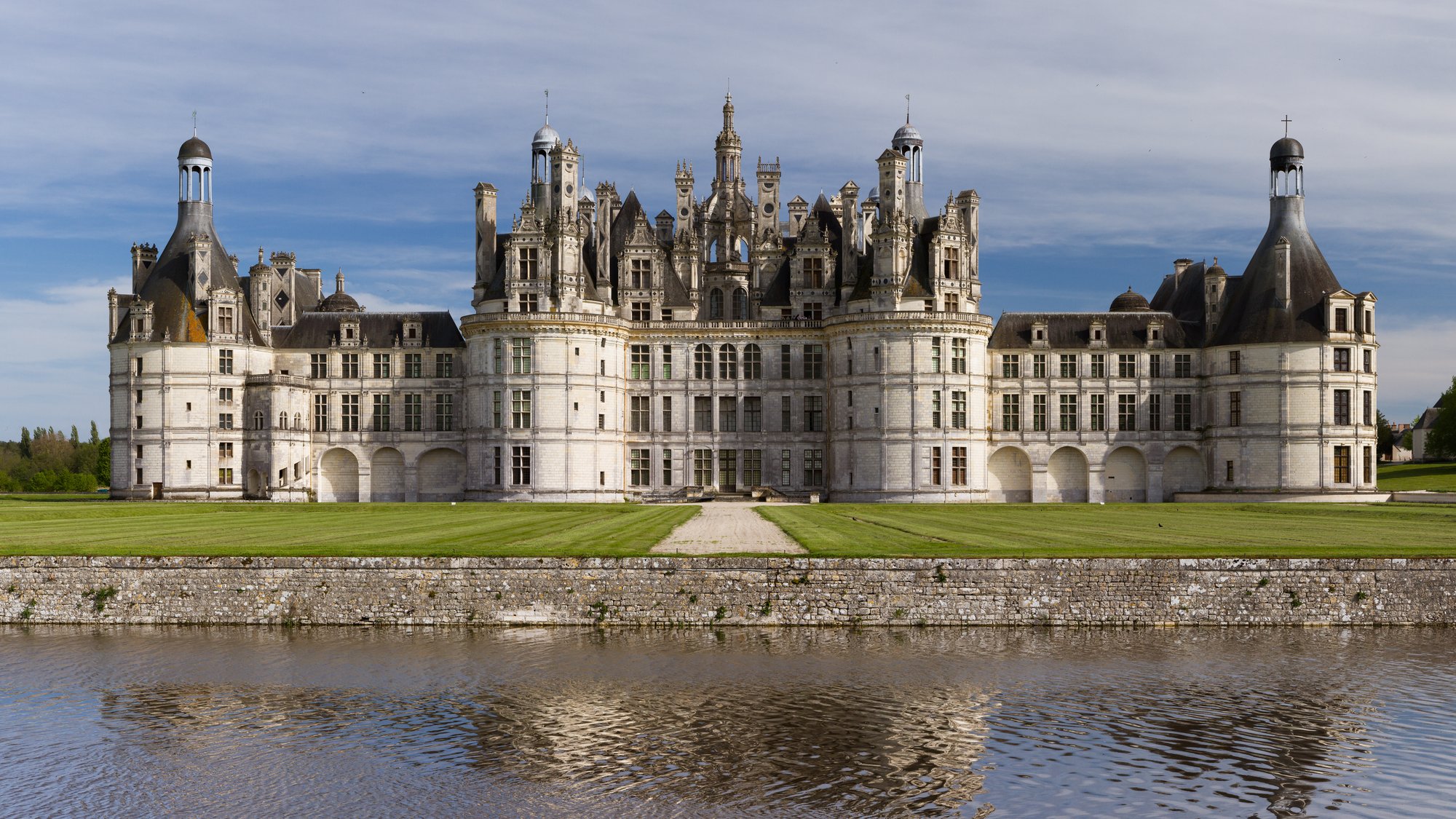
General information, current as of 10 November 2026. It is neither legal, tax or financial advice nor an offer of any property. AC PRIVATE - A List concierge is not a real estate agency: brokerage is handled by licensed agents and deeds by notaries. Château de Chambord illustrates this guide and is not for sale.
Photo : Benh LIEU SONG, CC BY-SA 3.0, Wikimedia Commons (recadrée)